
How to Select a VFD for Industrial Water Pump Applications
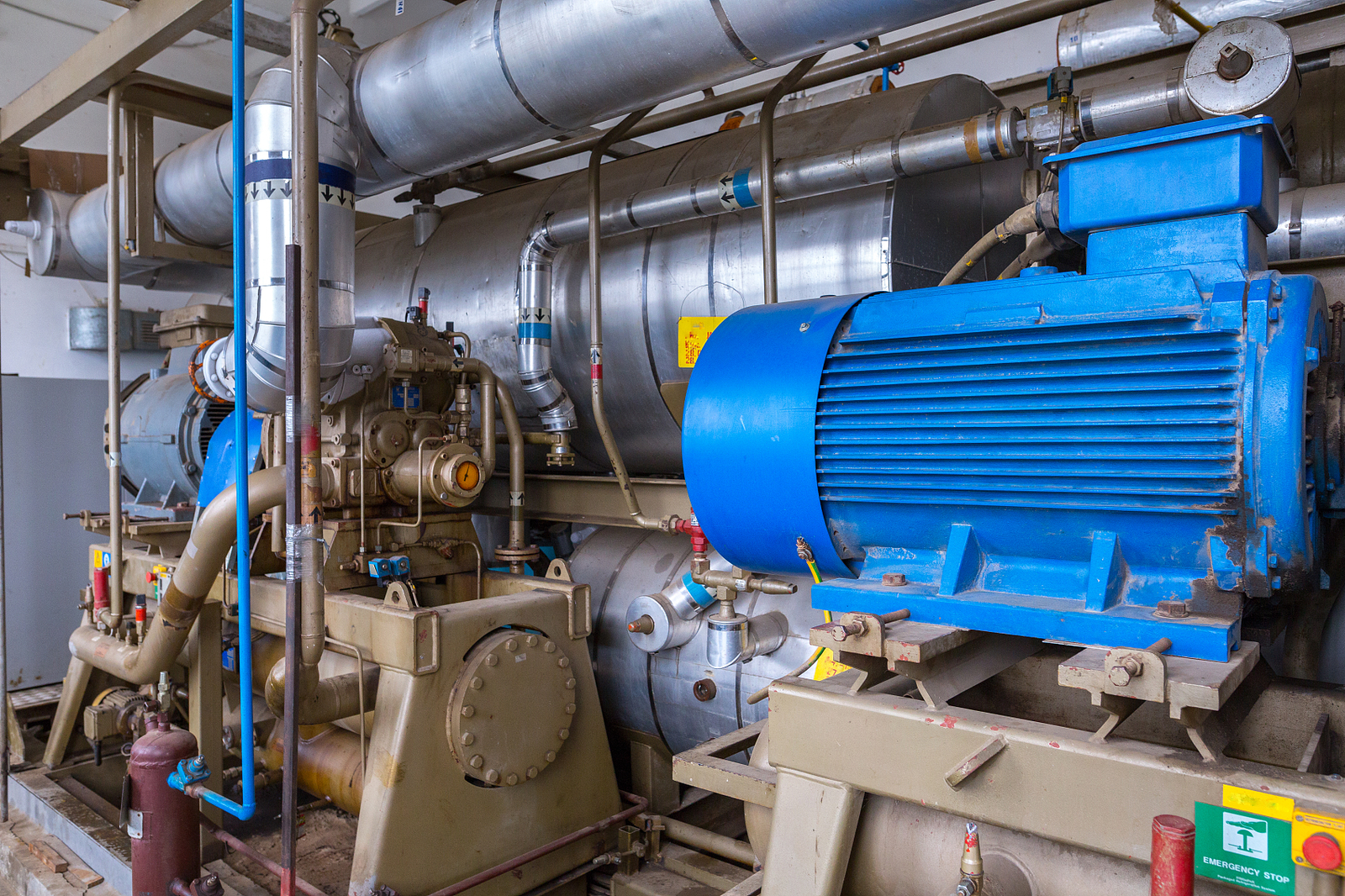
Selecting the right variable frequency drive for an industrial water pump is not simply a matter of matching the motor kilowatt rating. A reliable water pump VFD must suit the motor, pump curve, hydraulic system, control objective, site environment and communication requirements. When these factors are evaluated together, the drive can provide stable pressure or flow control, smoother starting and better operating efficiency.
This guide explains a practical selection process for OEMs, system integrators and industrial end users. It also outlines when a low-voltage platform such as the Wolong WD200 or an engineered medium-voltage platform such as the Wolong WD5100 may be appropriate.
Why Use a VFD for an Industrial Water Pump?
Many pumping systems are designed for the maximum expected demand, while actual operating demand changes throughout the day or production cycle. If a pump runs continuously at full speed and flow is restricted by a valve, energy is consumed even when the process requires less output. A VFD adjusts motor speed so pump output can follow the real process requirement.
In centrifugal pump applications, reducing speed can significantly reduce the power required at partial load. The exact saving depends on the pump curve, system curve, operating hours and control strategy, so energy performance should be assessed using real duty data rather than a fixed percentage claim.
- Maintain stable pressure, flow, level or differential pressure.
- Reduce mechanical shock during starting and stopping.
- Limit unnecessary throttling losses in variable-demand systems.
- Support automatic alternation and sequencing in multi-pump stations.
- Provide operating data, alarms and communication to a PLC, HMI or SCADA system.
1. Confirm the Motor Nameplate Data
Start with the motor rather than the pump. Record the rated voltage, current, power, frequency, speed, efficiency class, power factor and insulation information. Also confirm whether the motor is an induction motor or a permanent-magnet synchronous motor. The drive output current must be sufficient for the motor under the real operating conditions.
Do not select a drive by kilowatts alone. Motors with the same nominal power can have different rated currents, service factors and overload requirements. Cable length, motor cooling at reduced speed and the possible need for output reactors or filters should also be reviewed.
2. Understand the Pump and System Duty
A pump selection sheet or duty schedule should identify the normal operating point, minimum and maximum flow, static head, friction head and expected demand profile. For an existing installation, collect actual pressure, flow and current data over a representative period. These values help determine whether variable-speed control will operate inside the pump’s preferred operating range.
Key questions to ask
- Is the pump centrifugal, positive displacement or another type?
- Will the process control pressure, flow, tank level or temperature?
- What are the minimum and maximum required speeds?
- Is the load continuous, intermittent or cyclic?
- Does the application require one pump or coordinated multi-pump control?
- Could operation at low flow create overheating, cavitation or unstable hydraulic conditions?
The minimum safe speed should be defined by the pump manufacturer or system designer. A VFD can regulate speed, but it cannot correct an unsuitable pump, restricted suction condition or poor piping design.
3. Define the Control Objective
The most common water pump VFD control target is constant discharge pressure. A pressure transmitter sends feedback to the drive or PLC, and a PID loop changes motor speed to maintain the setpoint. Other systems may regulate flow, tank level or differential pressure across a process.
Clarify where the control logic will reside. For a compact standalone system, the VFD’s internal PID and I/O may be sufficient. For a large station, the PLC may manage sequencing, duty/standby rotation, permissives and remote supervision while each drive controls its connected motor.
4. Match Voltage and Power Level
For low-voltage pump systems, the WD200 covers 380–480 V applications from 0.75 to 710 kW. It supports induction and permanent-magnet synchronous motors, with V/F, sensorless vector control, closed-loop vector control and V/F separation modes. This makes it suitable for pumps, fans, conveyors and general OEM machinery.
For large water treatment, irrigation, pipeline or process pumping equipment using medium-voltage motors, the WD5100 is designed for engineered applications. Its range covers 3.3–11 kV and 220–15,000 kW, subject to project configuration and technical confirmation. Medium-voltage projects normally require a more detailed review of transformer arrangement, harmonics, bypass requirements, cooling, protection and site integration.
See the complete Wolong water pump VFD solution for a direct comparison of the two platforms.
5. Check Overload and Starting Requirements
Centrifugal pumps usually behave as variable-torque loads, but the real starting requirement depends on system pressure, check valves, pump type and operating sequence. Confirm the required acceleration time and whether the pump may start against a closed or partially loaded system.
For high-inertia equipment, positive-displacement pumps or applications with frequent starts, review overload current and thermal capacity carefully. Oversizing without analysis can increase cost, while undersizing can cause nuisance trips or shorten component life.
6. Evaluate the Site Environment
The installation environment directly affects VFD reliability. Confirm ambient temperature, altitude, humidity, dust, corrosive gas, vibration, enclosure protection and ventilation. Drives installed in outdoor cabinets, wastewater plants, mines or coastal areas may require additional environmental protection and thermal design.
- Apply derating when required by altitude or temperature.
- Provide adequate clean-air flow or engineered cabinet cooling.
- Separate power and signal cables and follow grounding practices.
- Review EMC, harmonic and motor-cable requirements.
- Confirm ingress protection and corrosion resistance for the site.
7. Plan Sensors, Communications and Protection
A stable control system depends on suitable instruments. Select a pressure, flow or level transmitter with the correct range and output signal. Place the sensor where it represents the process condition that the pump must control, not merely where installation is convenient.
Define the required digital and analog I/O, communication protocol and integration responsibility before ordering. The WD200 supports Modbus RTU over RS485, with additional networking options available for project integration. A complete system should also address dry-run protection, low suction pressure, overpressure, motor temperature, pump bearing condition and emergency stopping.
8. Consider Energy and Lifecycle Cost
The purchase price of a VFD is only one part of the project cost. Compare the expected operating profile, energy consumption, downtime risk, maintenance access and spare-parts strategy. A correct selection can reduce valve throttling, lower mechanical stress and provide data that helps maintenance teams identify abnormal conditions earlier.
For an energy estimate, use the measured or expected duty cycle together with pump and motor efficiency data. Compare the variable-speed case with the existing control method over annual operating hours. This creates a more credible business case than relying on a generic saving figure.
9. Commission the Pump System Correctly
Good equipment selection must be followed by structured commissioning. Verify motor data, rotation direction, acceleration and deceleration, minimum frequency, PID settings, sleep/wake logic and all protective interlocks. Tune the control loop gradually to avoid pressure oscillation or water hammer.
- Test the system at minimum, normal and maximum demand.
- Confirm stable operation during valve changes and pump sequencing.
- Record baseline current, speed, pressure and vibration values.
- Train operators on manual, automatic and fault-recovery procedures.
- Save the final parameter set and electrical drawings.
Common Water Pump VFD Selection Mistakes
- Selecting by motor power only: rated current and overload duty must also be checked.
- Ignoring minimum pump flow: very low speed may create thermal or hydraulic problems.
- Using an unsuitable pressure transmitter range: poor resolution can make control unstable.
- Forgetting cabinet cooling: excessive internal temperature reduces reliability.
- Skipping system-curve analysis: a VFD cannot compensate for an incorrectly sized pump or restricted piping.
- Leaving communication requirements until commissioning: protocol and I/O scope should be agreed during design.
Frequently Asked Questions
Can one VFD control multiple water pumps?
Yes, but the control architecture must be designed carefully. In many systems one VFD controls one duty pump while additional pumps are sequenced by a PLC or dedicated pump-control logic. If motors are switched on the VFD output, interlocking and switching procedures require special attention.
Does every pump application save energy with a VFD?
No. The largest opportunity is normally found where flow demand varies and the existing system uses throttling or bypass control. Systems dominated by static head or already operating continuously near full demand may show a different result. Calculate savings from the actual duty profile.
Should the VFD be larger than the motor?
Not automatically. Select the drive using motor current, load characteristics, overload requirement, environment and derating rules. The correct choice may be the matching rating or the next rating, depending on the application data.
Which Wolong drive is suitable for my pump?
The WD200 is intended for low-voltage applications, while the WD5100 serves engineered medium-voltage systems. Final selection depends on the motor, pump duty, supply, control architecture and installation environment.
Discuss Your Water Pump Application
Provide the motor nameplate, pump duty point, supply voltage, control target, operating hours and site conditions. The Wolong team can help identify a suitable drive platform and the technical items that should be confirmed before quotation. Contact Wolong Drives to discuss your project.